Artech Gallery
Gallery Interior
New York, NY
2025
New York, NY
2025
Client:
The Artech Foundation, NextG Group
Location:
445 Park Ave, New York, NY 10022
Area:
4000 sqf
Status:
Completed 07/15/2025
Architectural Design:
Yiran Zhang, Yalun Li
Collaborators:
General Contractor: JTonic Design and Construction Corp.
MEP: Jason Deng
Lighting: Cosine, LLC
Architect of Record: Yu Architect, LLC
Phorography:
Gong Cheng, Jin Yan, Zhu Lu Yao
Publications:
Artech Homepage
The Artech Foundation, NextG Group
Location:
445 Park Ave, New York, NY 10022
Area:
4000 sqf
Status:
Completed 07/15/2025
Architectural Design:
Yiran Zhang, Yalun Li
Collaborators:
General Contractor: JTonic Design and Construction Corp.
MEP: Jason Deng
Lighting: Cosine, LLC
Architect of Record: Yu Architect, LLC
Phorography:
Gong Cheng, Jin Yan, Zhu Lu Yao
Publications:
Artech Homepage
ARTECH Space transforms a Park Avenue storefront into an art venue for dialogue between contemporary art and technology in Manhattan. While the non-profit ARTECH Foundation fosters innovation in the arts, the interior renovation of ARTECH Space embodies its ethos through experimental and expressive materiality.
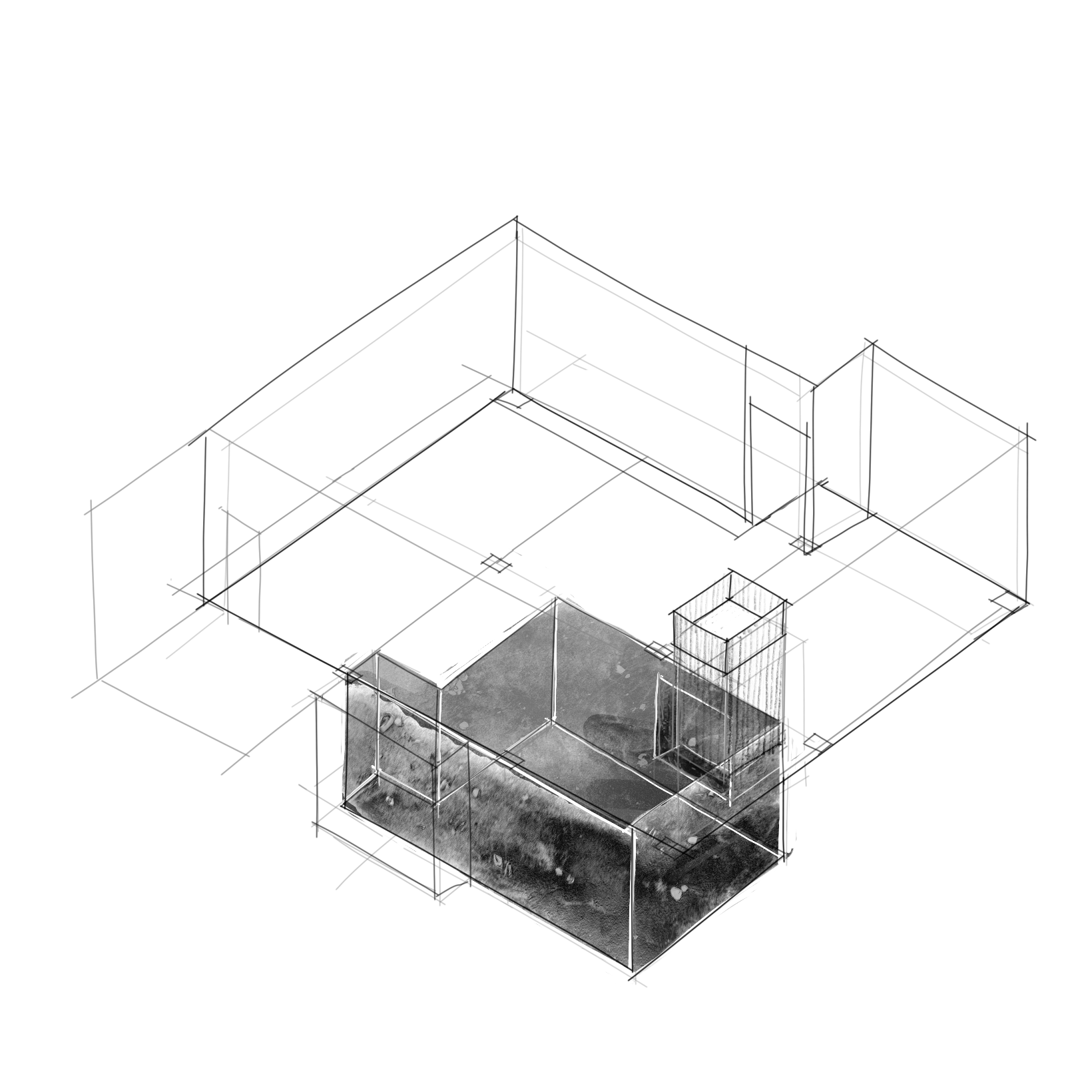
Spanning approximately 4,000 sq ft across two stories, the space revolves around a conceptual triad—rock, paper, and scissors—structuring the spaces for distinct experiences: “Rock,” a cave-like monolithic enclosure; “Paper,” a bright, blank gallery space extended like a malleable sheet; and “Scissors,” a metallic staircase that cut through the space with a transient void.
Spanning approximately 4,000 sq ft across two stories, the space revolves around a conceptual triad—rock, paper, and scissors—structuring the spaces for distinct experiences: “Rock,” a cave-like monolithic enclosure; “Paper,” a bright, blank gallery space extended like a malleable sheet; and “Scissors,” a metallic staircase that cut through the space with a transient void.
Client:
The Artech Foundation, NextG Group
Location:
445 Park Ave, New York, NY 10022
Area:
4000 sqf
Status:
Completed 07/15/2025
Architectural Design:
Yiran Zhang, Yalun Li
Collaborators:
General Contractor: JTonic Design and Construction Corp.
MEP: Jason Deng
Lighting: Cosine, LLC
Architect of Record: Yu Architect, LLC
Phorography:
Gong Cheng, Jin Yan, Zhu Lu Yao
Publications:
Artech Homepage
The Artech Foundation, NextG Group
Location:
445 Park Ave, New York, NY 10022
Area:
4000 sqf
Status:
Completed 07/15/2025
Architectural Design:
Yiran Zhang, Yalun Li
Collaborators:
General Contractor: JTonic Design and Construction Corp.
MEP: Jason Deng
Lighting: Cosine, LLC
Architect of Record: Yu Architect, LLC
Phorography:
Gong Cheng, Jin Yan, Zhu Lu Yao
Publications:
Artech Homepage
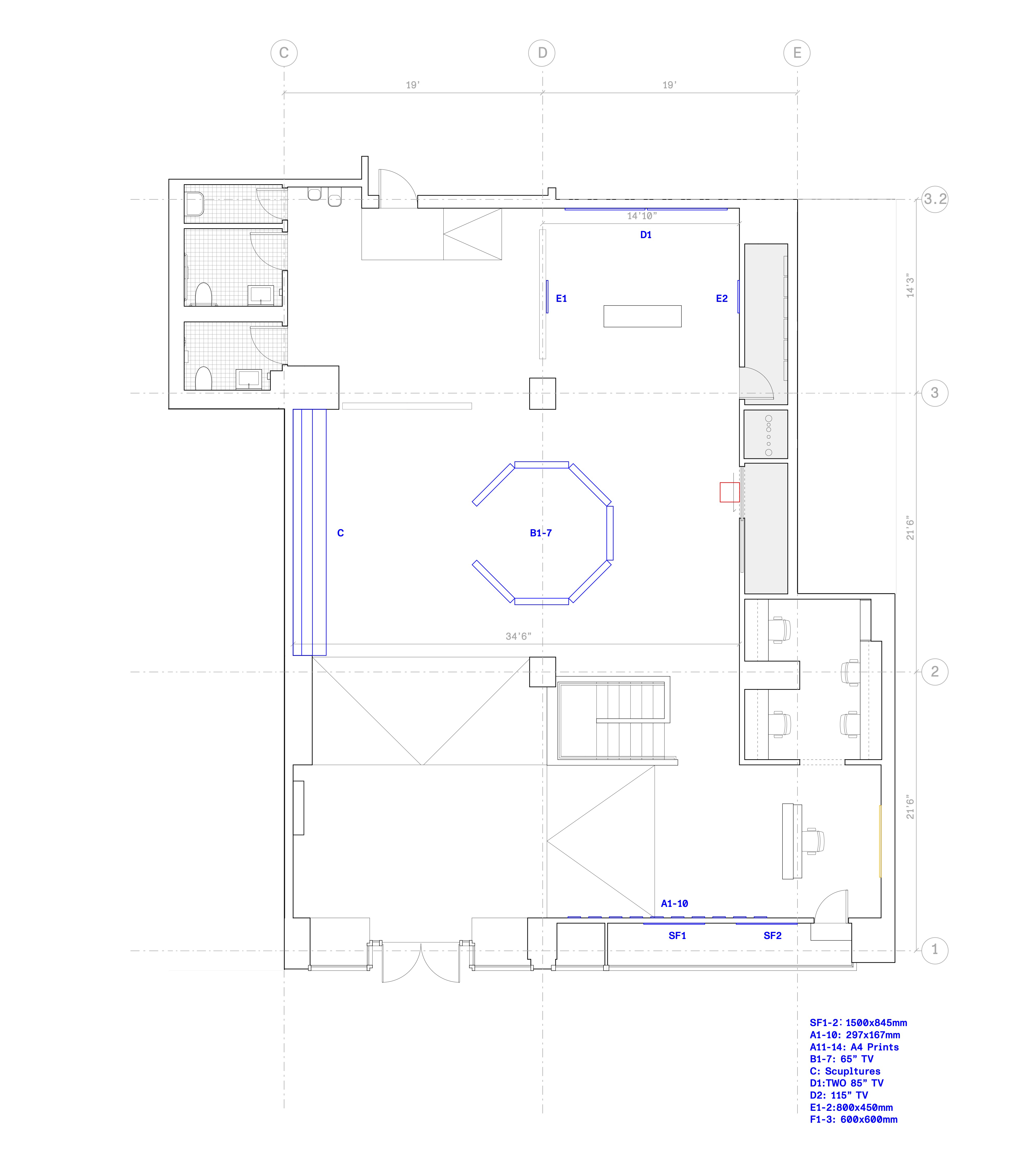
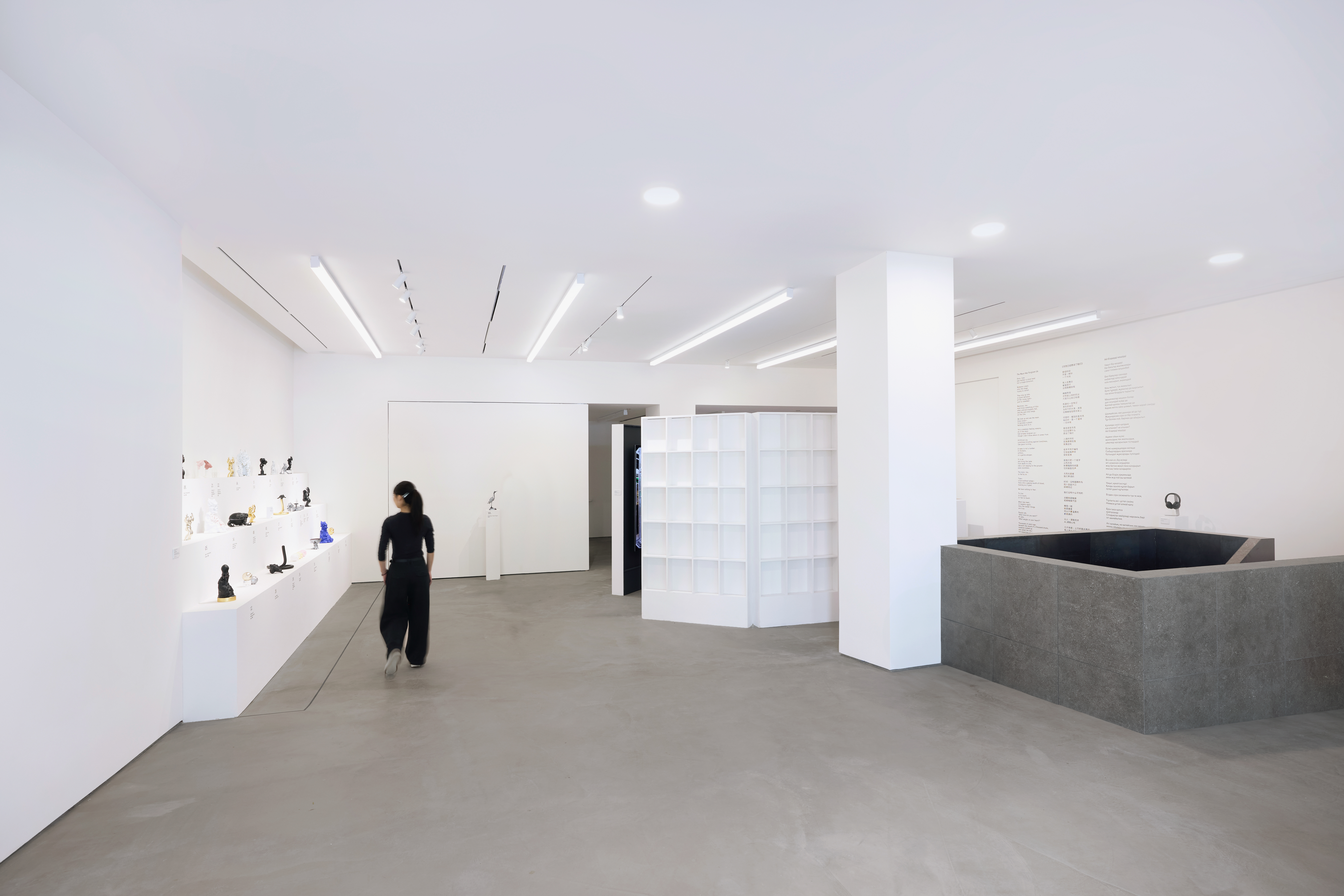
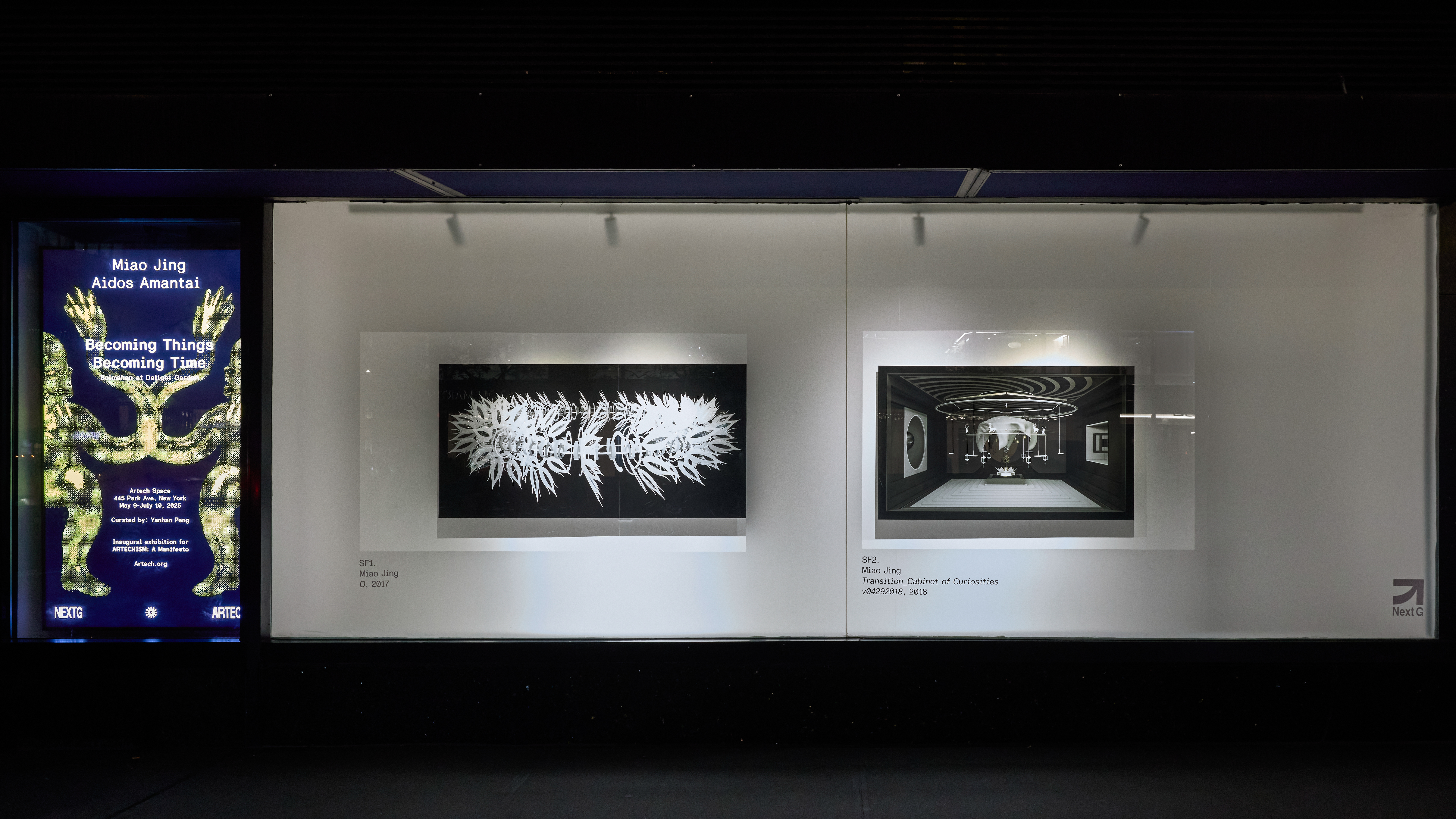
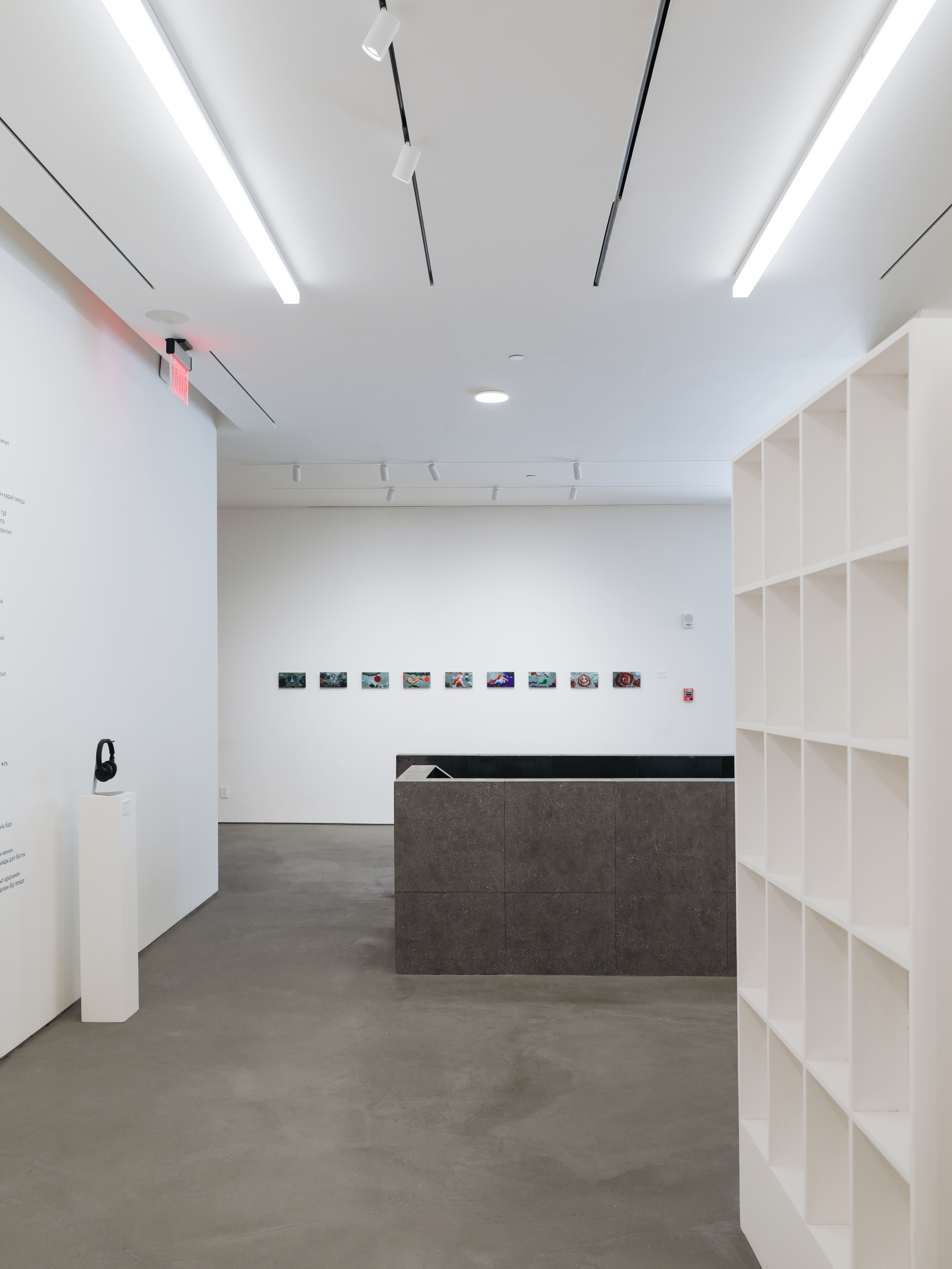
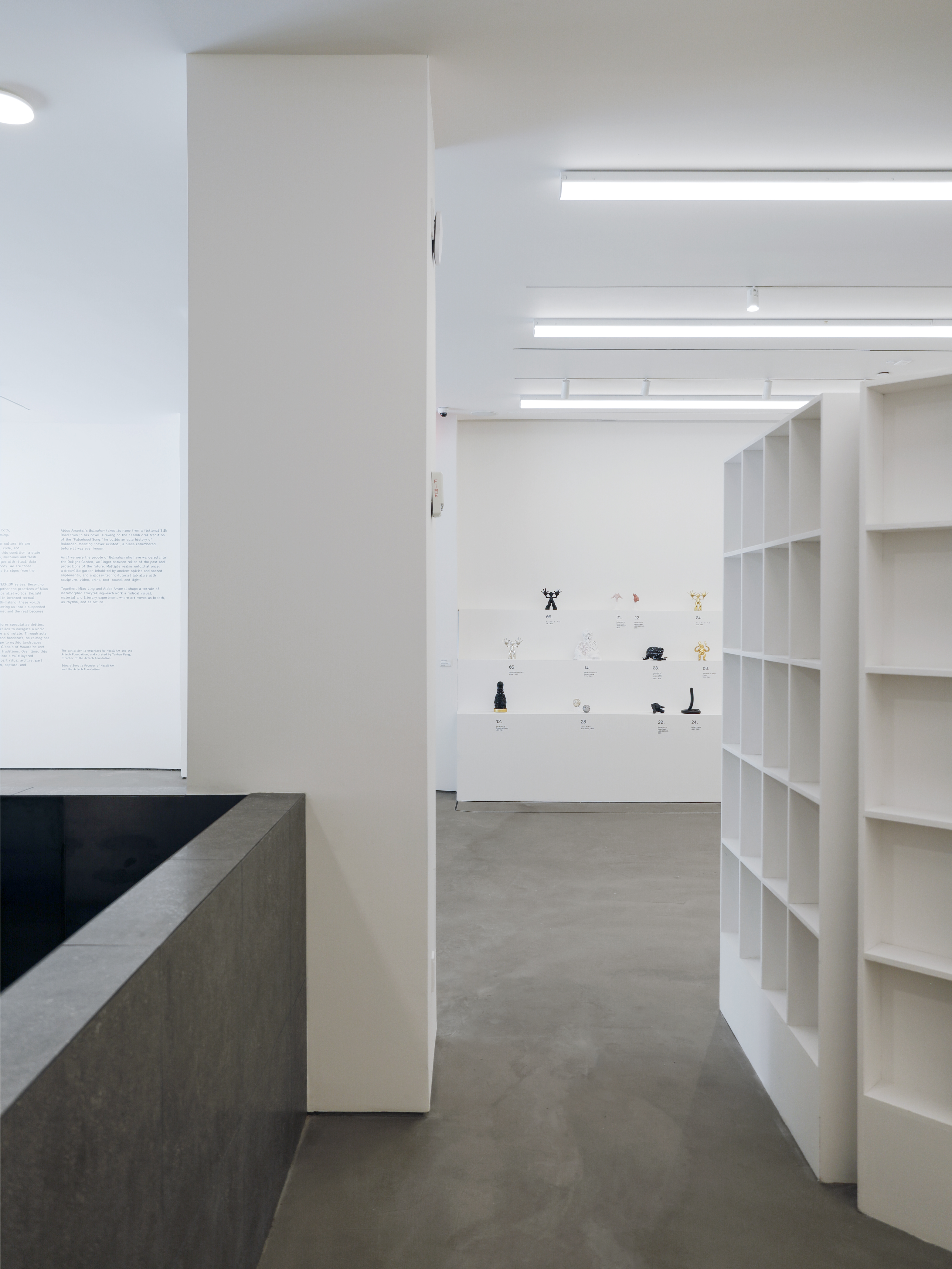
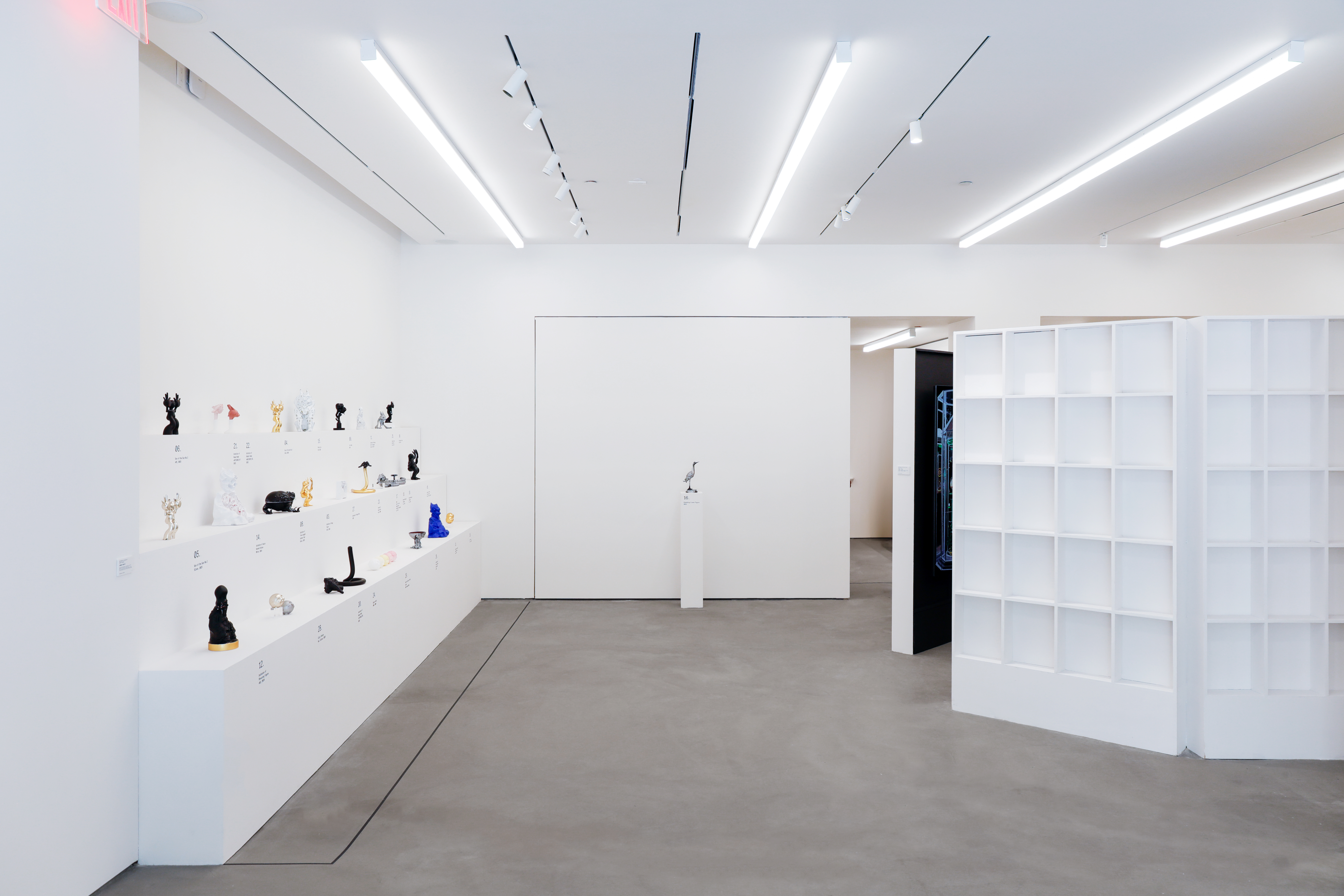
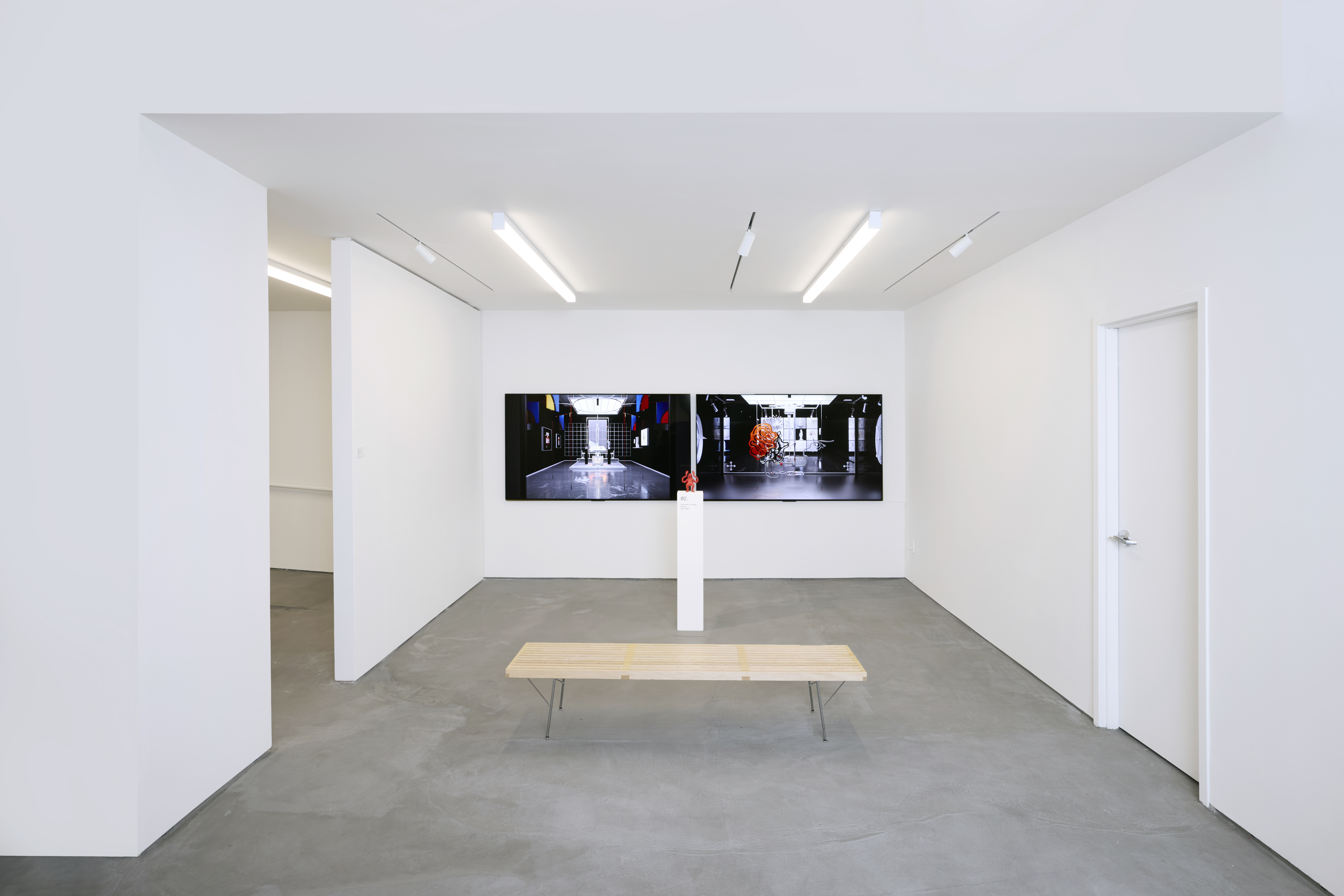
On the ground level, an open gallery spanning over 3,000 sq ft with a 12-foot ceiling and a generous street-facing window offers a flexible space for evolving programs and exhibitions. The space, like paper, is adaptable—a canvas for continuous reinvention of contemporary art. The infrastructure—including lighting, MEP, and audiovisual system—is integrated with visual restraint and precise detailing to facilitate multi-media exhibitions. Existing structural grids organize a rhythmic ceiling layout for track lighting and linear LEDs. To accommodate a wide range of exhibitions, from traditional canvas to interactive or new media installations, the gallery is lined with recessed ceiling channels along the edges, housing electrical, audiovisual, and internet outlets.
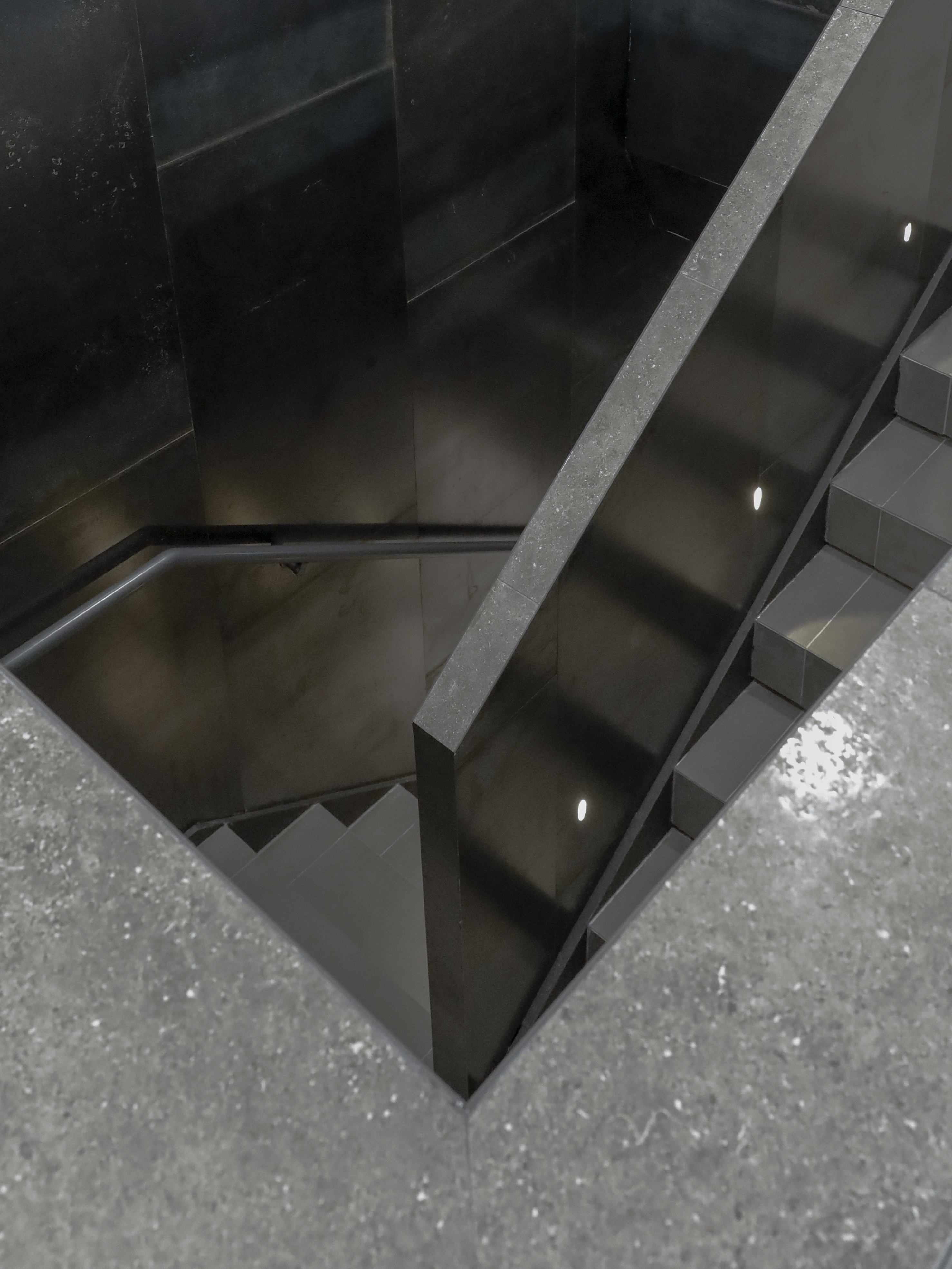
Connecting the ground-level open gallery to the lower level, the existing staircase is refurbished with treads, cladding, handrails, and lighting. Like “scissors,” the staircase creates a defining shaft that pierces through the clean, planar, “paper-like” gallery. The raw, naturally oxidized surfaces of the hot-rolled steel plate cladding create a chromatic and tactile contrast to the crispness and whiteness of the open gallery, reshaping visitors' perception as they descend into the basement.
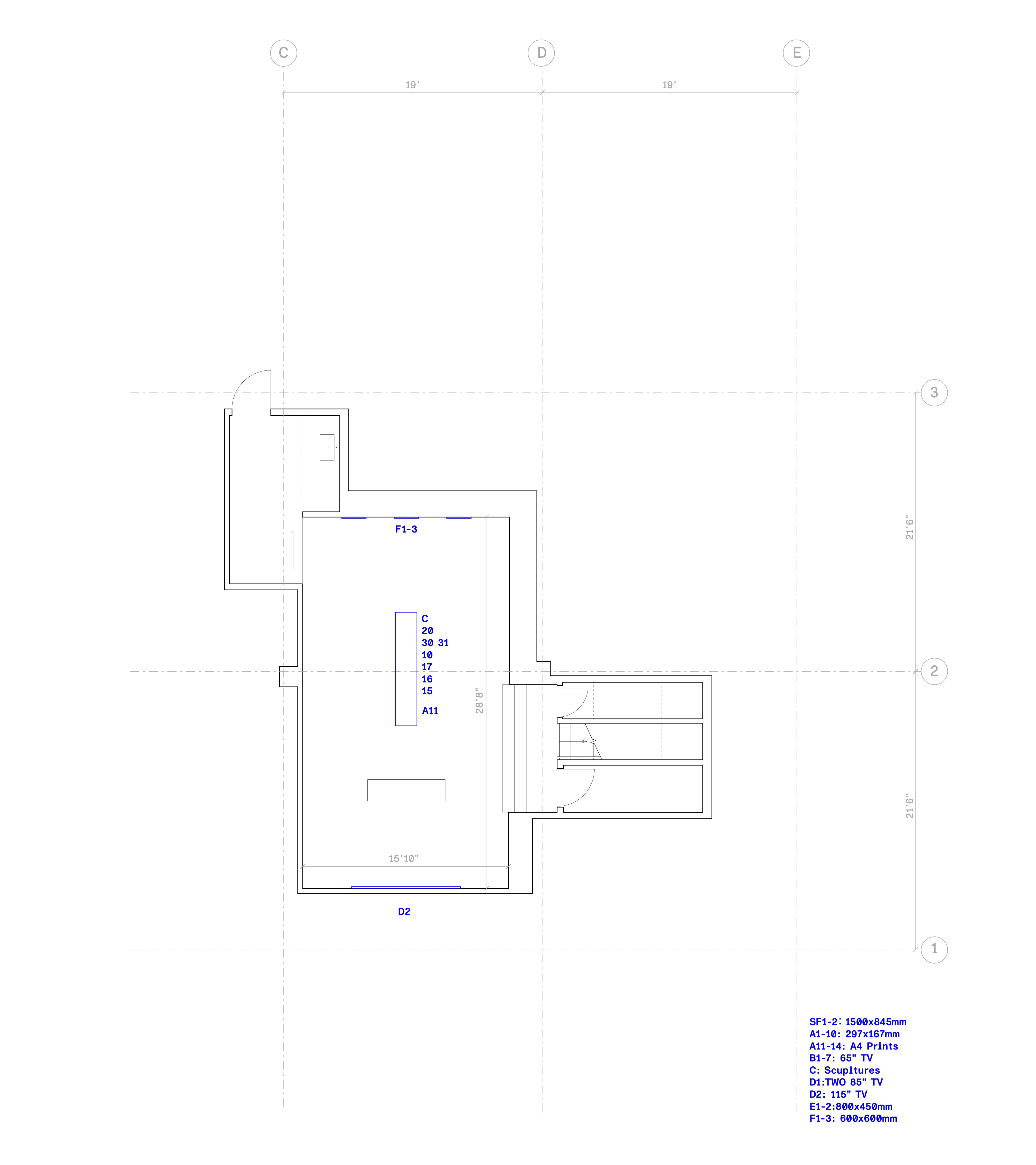
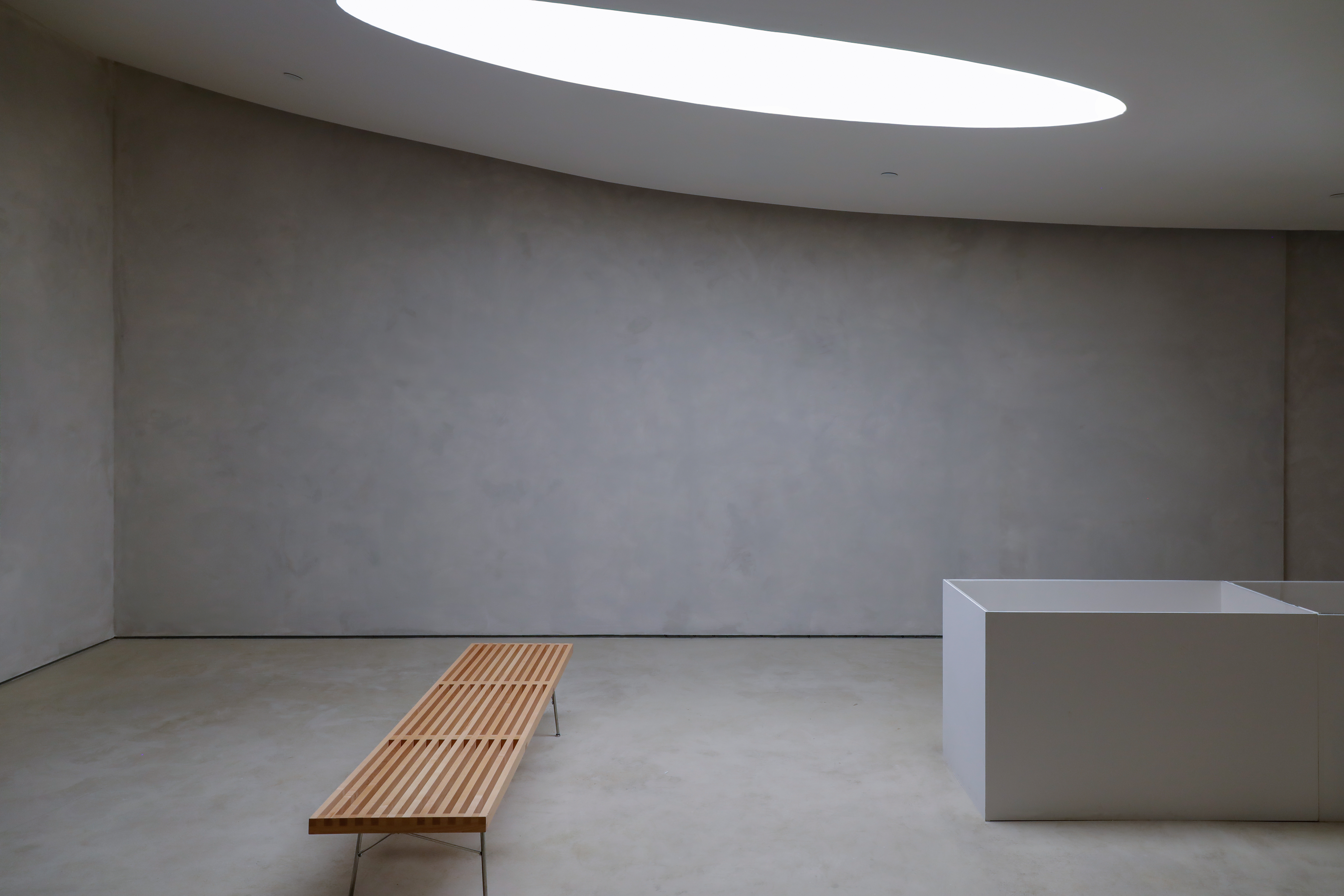
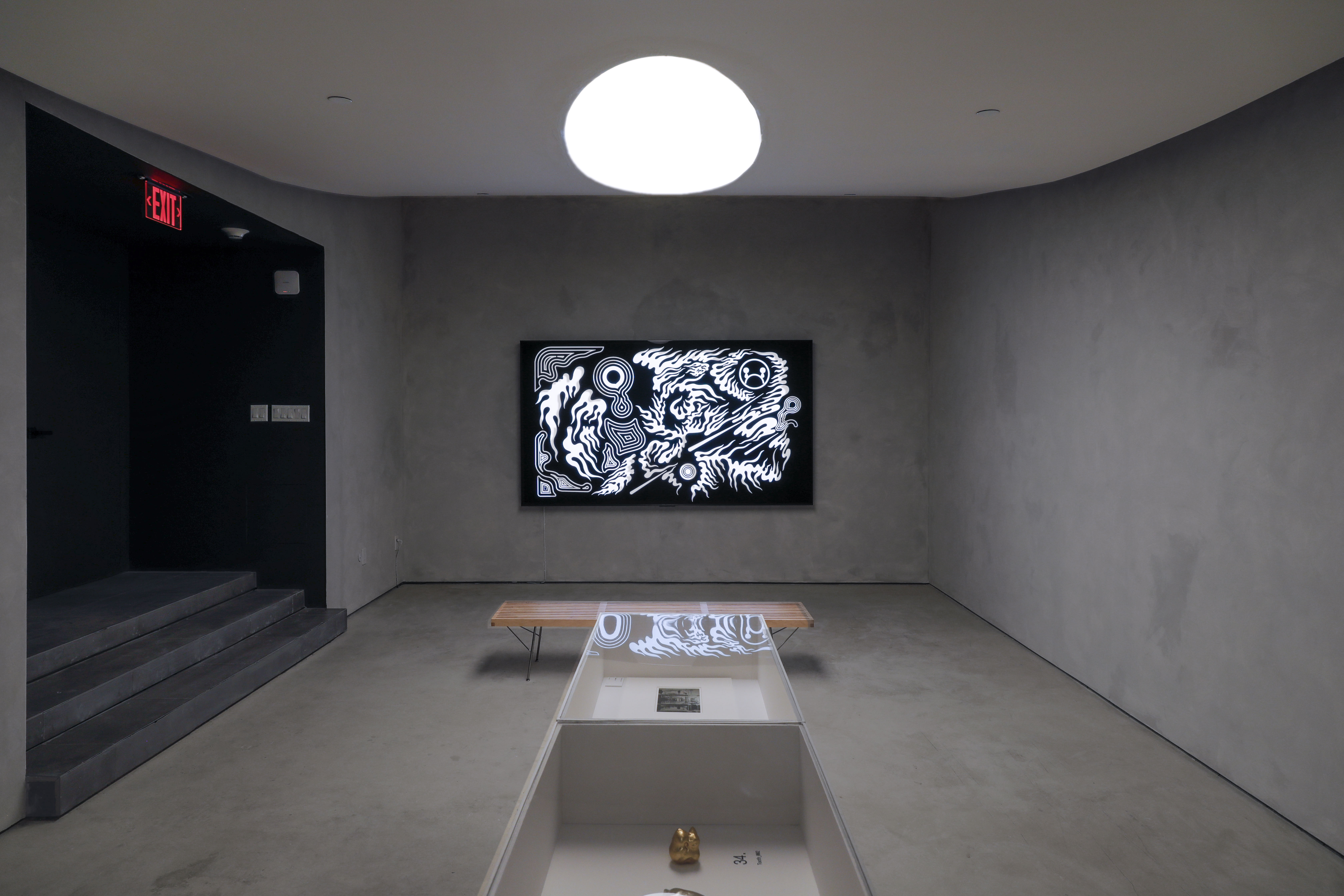
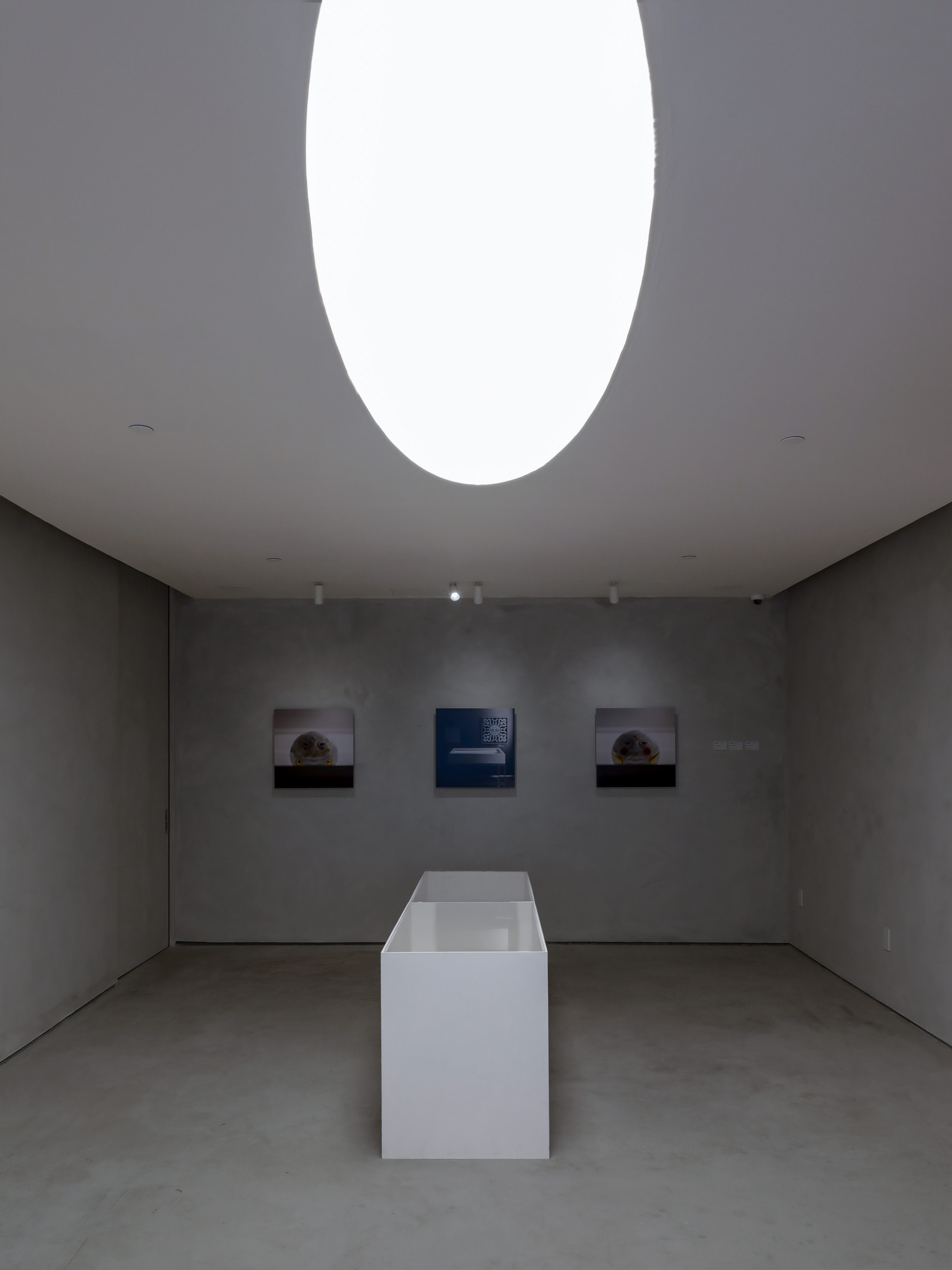
Upon descending, visitors find themselves immersed in the basement gallery with a smaller footprint of around 700 sq ft. Evoking the density of “rock,” this basement gallery is dim, compact, and acoustically muted—like the interior of a monolith. The curved ceiling, a symbolic “paper drapery” from the ground level, is sliced open with an elliptical aperture of light. This main light source casts soft and focused lighting within four bounding walls of textured grey. The basement gallery thus provides a contemplative atmosphere that encourages more intimate, immersive experiences with both artwork and the space itself.
Connecting the ground-level open gallery to the lower level, the existing staircase is refurbished with treads, cladding, handrails, and lighting. Like “scissors,” the staircase creates a defining shaft that pierces through the clean, planar, “paper-like” gallery. The raw, naturally oxidized surfaces of the hot-rolled steel plate cladding create a chromatic and tactile contrast to the crispness and whiteness of the open gallery, reshaping visitors' perception as they descend into the basement.
Upon descending, visitors find themselves immersed in the basement gallery with a smaller footprint of around 700 sq ft. Evoking the density of “rock,” this basement gallery is dim, compact, and acoustically muted—like the interior of a monolith. The curved ceiling, a symbolic “paper drapery” from the ground level, is sliced open with an elliptical aperture of light. This main light source casts soft and focused lighting within four bounding walls of textured grey. The basement gallery thus provides a contemplative atmosphere that encourages more intimate, immersive experiences with both artwork and the space itself.